
Radical Strangeness and Interconnection of All Things
Yi Izzy Yu on her Silk & Sinew story "Pig's Feet"

by Yi Izzy Yu
What inspired you to write your story found in Silk & Sinew?
“Pig Feet” is a twice-told tale, a play off a classical Buddhist parable. The plot is consistent across iterations: a callous man who too lightly disregards the suffering of others through injury and/or mysterious karmic magic suddenly finds himself reborn as a pig. As such, he is forced, horrifyingly, to experience the pig’s entire life: from the warmth and heat of gestation and the peculiar sensory pleasure of being a pig, to its horror as it sees its mother butchered and awaiting its own turn, and the horrifying torture of the butchering process as his consciousness lingers.
I was deeply shocked and moved the first time I read the original story. And I felt like I really got what “Buddhist” horror was in the reading of it, the way certain tales of Zhuangzi brought home the nature of “Taoist” horror to me. Such distinctions are fascinating to me partly because they directly speak to discussions about whether or not Eastern and Western approaches to horror differ in meaningful ways.
To the extent that they do, I think the differences are often rooted less in subject matter than in metaphysics and aesthetic emphasis. Both my story and the original parable, for example, traffic in a body horror grounded in the transmigration of souls and an awareness of suffering. They both also locate horror in the ultimate emptiness of ego and the interconnection of all things. Thus, they show how the same perceptions that accompany mystical awakening can be subjects of horror if one is not spiritually, morally, or psychologically prepared for them.
What do you hope readers take away from reading it?
I hope they think about some of the topics raised by the original parable, including how horrifyingly easy it is to discount the suffering of others. For me the story argues for deep empathy and compassion, not vengeance, not the satisfying symmetry of punishment, but something more uncomfortable than either of those. That’s why the narrator is self-justifying at every turn. And I hope readers sit with that, with how fluently and convincingly we can narrate our own rightness, especially when we’ve convinced ourselves that what we’re doing is a righting of the scales.
I also hope the story challenges the intellectual colonization that seeks to displace the actual spiritual worldviews of Buddhism, Taoism, Hinduism, shamanism, and local and indigenous belief systems with other ideological frameworks.
I want readers to encounter the full and radical strangeness of what Buddhism, Taoism, and the zhiguai tradition are actually saying about reality and the nature of ourselves. That is, for me, the most radical and most necessary thing the story can do.
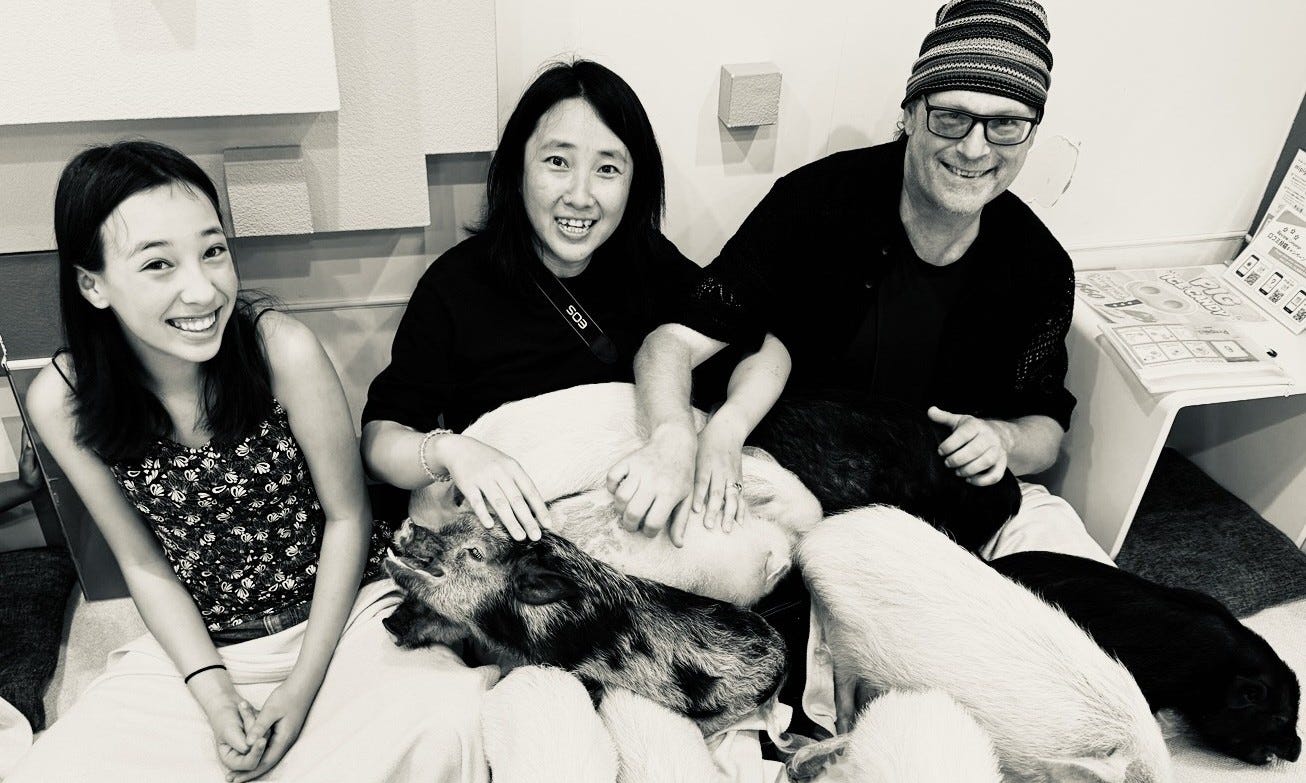
For more of Izzy’s work:
Stars that Pause: 2,000 Years of Asian UFO Encounters & Lore, by Yi Izzy Yu & John Yu Branscum
Zhiguai: Chinese True Tales of the Paranormal and Glitches in the Matrix, Translated by Yi Izzy Yu & John Yu Branscum
The Shadow Book of Ji Yun: The Chinese Classic of Weird True Tales, and Occult Knowledge, Translated by Yi Izzy Yu & John Yu Branscum
Hear Izzy read from her essay “The Substitute” from the essay collection, Unquiet Spirits, edited by Lee Murray & Angela Yuriko Smith
About:
In 2011, Yi Izzy Yu left Northern China for the weird wilds of Pennsylvania, with nothing but $500 in her pocket and a love for Chinese paranormal stories and horror that she inherited from her grandmother. Since then, she has acquired a PhD in Literature and Applied Linguistics, taught Chinese and English in high schools and universities, and DJ’ed a radio show on K-pop. She is the co-translator of The Shadow Book of Ji Yun, and her other creative work has appeared in magazines and anthologies ranging from New England Review, Strange Horizons, and Copper Nickel to Unquiet Spirits: Essays by Asian Women in Horror. Her nominations and awards include Year’s Best Microfiction, Best of the Net, and the Gabriel García Márquez “Gabo” Award for Translation and Multilingual Literature; and she is one of the 2024 Ignyte finalists for creative nonfiction.
Social Media Links: Twitter: @YizzyYu; Facebook: /isabella.yu.9
Silk & Sinew: A Collection of Folk Horror from the Asian Diaspora:
Thanks for reading Garnet on Winter! Subscribe for free to receive new posts and support my work.